
Why an American Wheel Carries Two Zeros
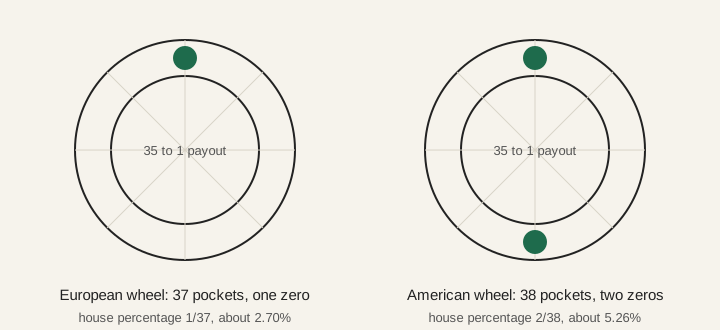
The two wheels look alike and are not. A European wheel has thirty-seven pockets, the numbers one to thirty-six and a single zero. An American wheel has thirty-eight, because a double zero was added.
Every straight-up number still pays thirty-five to one on both wheels. That payout would be exactly fair on a wheel of thirty-six pockets. On thirty-seven the shortfall is one part in thirty-seven, a little over two and a half per cent. On thirty-eight it is two parts in thirty-eight, a little over five and a quarter per cent. Adding one pocket without changing the payout roughly doubled the house percentage.
The history is the reverse of what most people assume. The single zero came second, introduced in the middle of the nineteenth century by operators competing for players who could choose where to play. The double-zero form is the older survival, carried to American rooms and kept there.
Nothing about the physical wheel enforces this. It is a payout convention meeting a pocket count, and the drawing above contains the whole argument.